
The Packing List
On the practice of paying attention to your future self

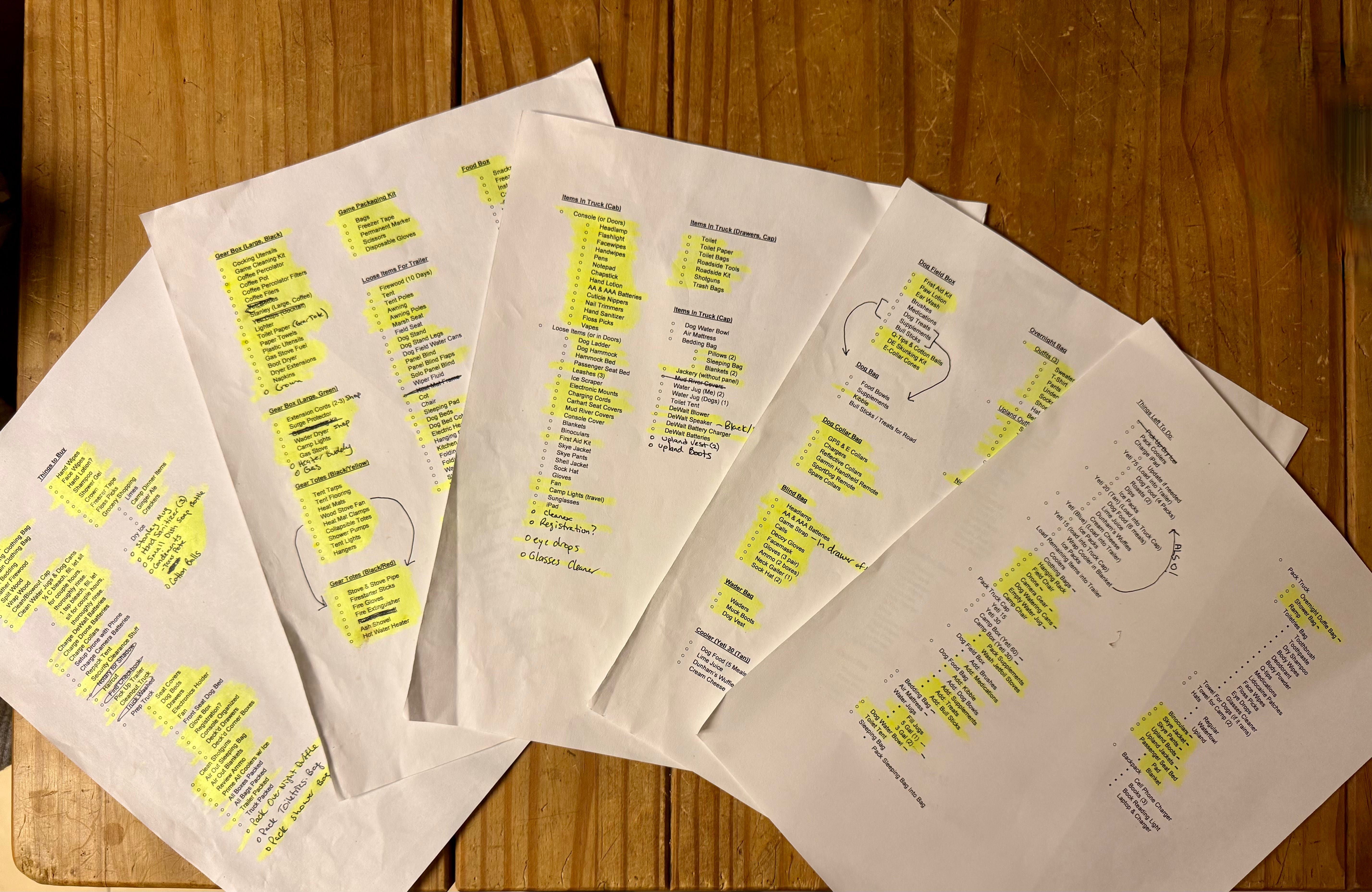
Packing list, version 33, two days before departure.
The first time I packed for a hunting trip to North Dakota, I packed like I was deploying to Afghanistan.
This was the fall of 2013. I had just come home from a deployment, moved my family from Tennessee to Kansas, brought home a wirehaired vizsla puppy named Dunham who was eight weeks old at the time, and had been invited, for the first time, on what would become an annual trip to the Northern Plains with my best friend and a group of guys who had been making the same trip, same week, same house, for the better part of thirty years. The invitation came because of my first dog, Gus, who had recently revealed himself to be a bird dog with extraordinary instincts. I had eight weeks between coming home from the foothills of the Himalayas and pulling out of my Kansas driveway for North Dakota.
Eight weeks to prepare for a trip I knew almost nothing about.
So I packed the way I knew how to pack. Four pairs of pants. Four shirts. Eight pairs of socks. Eight pairs of underwear. Shotgun, ammunition, decoys, gear bag, two pairs of waterfowl gloves. I loaded a Suburban full of equipment, put Gus in the passenger seat, and pointed the truck north.
The trip lasted nine days.
I had a problem on day one.
I had not packed a knife for cleaning birds. I borrowed one. I had not packed enough waterfowl gloves, and the two pairs I brought were soaked through by lunch on the first morning. I had not packed a boot dryer or a glove dryer. I had not packed enough socks. I had not packed enough shirts. I had not packed a single piece of clothing meant for resting at night around the dinner table, which meant for nine days I either wore hunting clothes or wore the one pair of sweatpants I had thrown in at the last minute.
I made three trips into the nearest town for supplies. Each trip was thirty minutes one way.
The worst of it was Gus. I had brought him on the inaugural trip of his young life, and I had packed for him exactly the way I would have packed for a stuffed animal. A brush. Which is a strange choice for a shorthaired Vizsla, but the heart wants what the heart wants. His food. A water bowl. A food bowl. Nothing for his paws, which were destroyed by day three from running through wheat stubble and cattail. Nothing for the cuts and scrapes that come with a week of hard hunting. Nothing for the fatigue, the muscle soreness, the recovery a working dog actually needs at the end of a ten-hour field day.
I felt, for nine days, like the most novel and unprepared upland hunter ever to step onto the prairie.

North Dakota, October 2013. Yes, I was that bad and the guys had seen enough by day five. The guys literally made me wear a “dunce” cap. I deserved it and I knew it.
I do not love asking for help. I love it even less when the request comes in the form of hey, do any of you guys have an extra... repeated daily for over a week. By day seven I was a man whose pride had been sufficiently humbled that he was determined to make some changes.
I drove home, unpacked, sat down at my desk, and started a list.
That list was version one. The current list is version thirty-three.
I would like to explain how a hunting packing list ended up at version thirty-three, but the explanation requires me to provide some background and context about myself.
I spent the first four years of my military career in The Old Guard, the Army’s elite drill and ceremony regiment, where every movement is executed by the numbers with precision, repetition, and consistency. That experience never quite leaves a person. Whatever the opposite of winging it is, that is the operating system I run on. I do not believe I can control the universe. I do believe I can refuse to be its plaything, at least in the small areas where preparation actually matters.
After that North Dakota trip, I made a list of every item I had brought, every item I had borrowed, every item I had wished I had, and every item I had learned, the hard way, was nonnegotiable. That became the foundation.
The list evolved each year. I would come home from a trip, sit down with a journal full of notes, and update the spreadsheet. What worked. What did not. What needed to be added. What needed to be upgraded. What had failed in some new and creative way the prairie had invented specifically to humble me.
After a few years, the list split. North Dakota in October needed different clothes than Kansas in December, which needed different clothes than Montana in October, which needed different gear than any of them depending on whether I was staying in a house, an Airbnb, or a Kodiak Canvas tent on BLM ground in the middle of nowhere.
Each scenario became its own document. Each document developed sub-lists. Each sub-list grew tabs.
I will spare you the full taxonomy, but here is a representative sample of the file structure for a single Montana upland trip with the tent setup:
Montana_Oct_Tent_Gear (hunting clothes, camp clothes, camp items)
Montana_Oct_Tent_Camp (tent items, gear room items, kitchen items)
Montana_Oct_Tent_Dogs (dog camp items, dog cots and bedding, dog medical box with its own sub-list, dog truck items)
Montana_Oct_Tent_Truck (everything that goes in the truck from roadside kit to stocking the Decked drawers, floss picks, kleenex, eye drops, spare toothbrush, washer fluid, extra fuses, you name it)
Montana_Oct_Tent_Truck_Camping (Jetboil, freeze dried food, condiments, salt and pepper, utensils, water, soap, dry shampoo, sleeping bag, blankets, air mattress, three styles of lights, book and journal, and so much more)
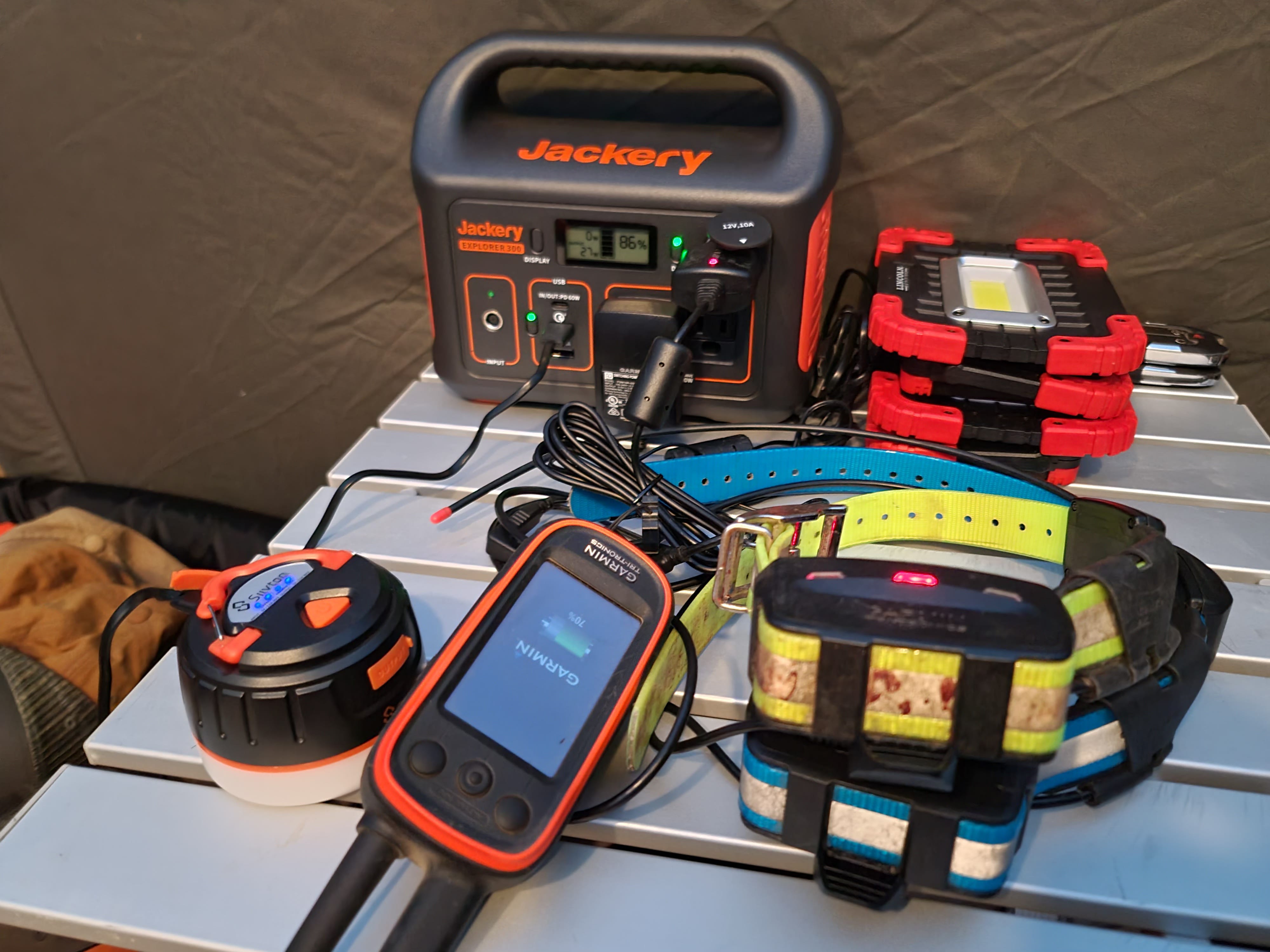
Montana_Oct_Tent_Coolers (four Yetis, each with a different purpose, a two-dozen ice pack rotation maintained by a chest freezer running off a solar generator at camp)
This is one trip.
I know how this looks.
There are versions of this list structure for every state, every month, every camp configuration, every hunt I run.
Some mornings, looking at the spreadsheets, I feel less like an outdoorsman and more like a data scientist with a hunting habit. Some mornings I feel less like a data scientist and more like Rain Man with achy joints. The category of person I most resemble depends on how much coffee I have had and how many spreadsheets are open across the dual computer screens on my desk.
I will defend the list, though. I will defend it cheerfully.
Here is what years of refinement have actually taught me, and it has very little to do with hunting.
A packing list, at first, is a tool for not forgetting things. That is the surface function. Anyone who has tried to start a fire with damp matches understands the value of the surface function. But the list, if you keep at it long enough, becomes something else.
It becomes a written record of your own learning, addressed to your future self.
Every line on the spreadsheet is a small monument to a previous failure. The boot dryer is there because I once spent three days in soaked boots. The skunk kit is there because someone else’s dog, never mine (knock on wood), found one and the camp had no remedy. The DeWalt battery-powered shop blower is there because for years our trucks and tents and gear were caked in prairie dust on the long drive home, and I finally bought a tool that fixed it. The dog medical kit, the big one, the Yeti Loadout GoBox 60 that can literally enable someone to perform surgery, exists because of every cut, scrape, thorn, quill, abrasion, and unexplained gastrointestinal disaster that has crossed paths with one of my dogs over the past twelve years.
The list, in this sense, is a slow apprenticeship. You do not get to skip ahead. You earn each entry the hard way, on a previous trip, and then you write it down so that the next trip is slightly less hard. The reward is not the trip you are packing for. The reward is the slow accumulation of competence that makes the field a place of presence rather than a place of problems.
That is the difference, I think, between enduring a trip and inhabiting one.
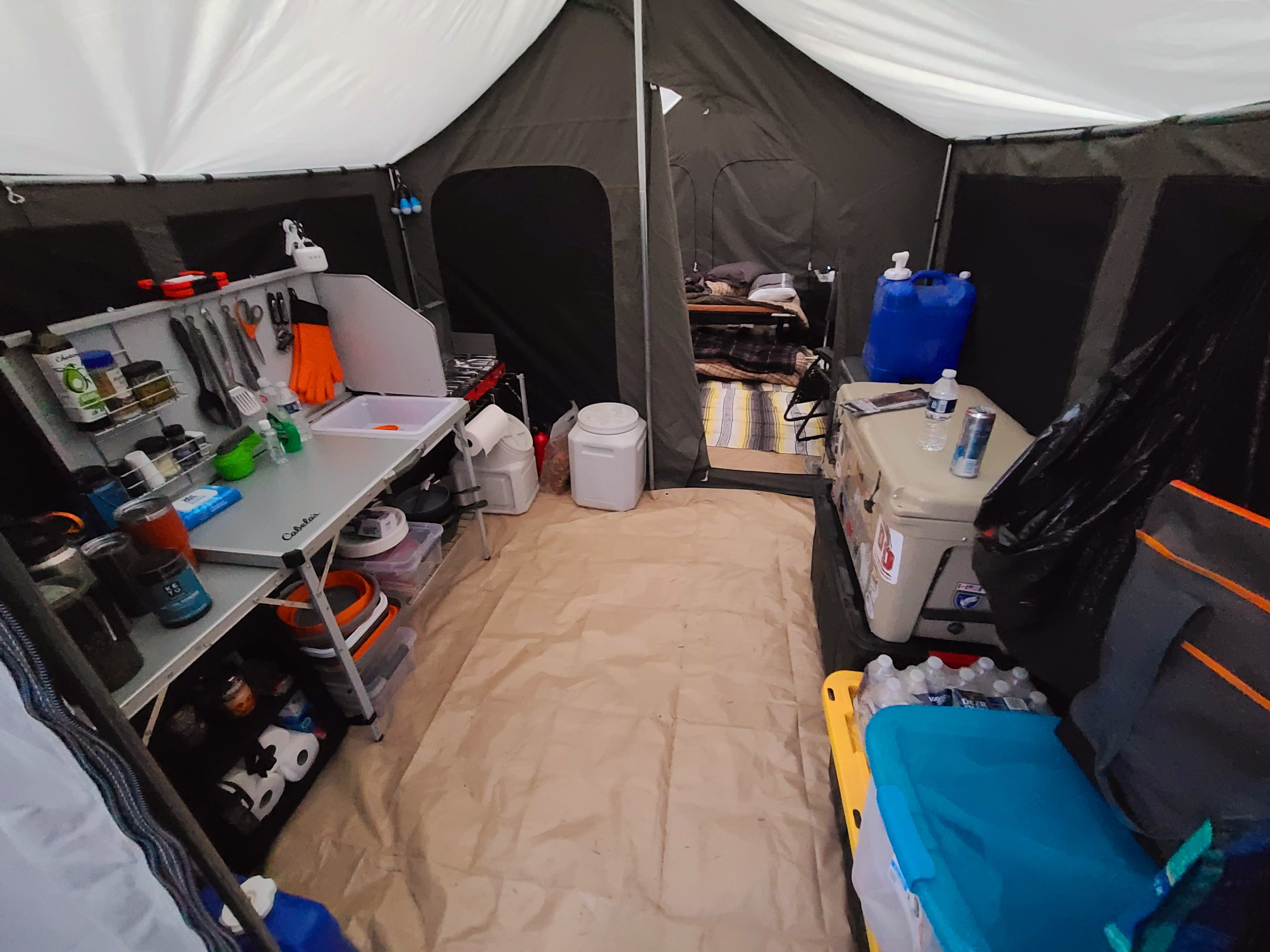
Bird camp, fully self-sustained, somewhere on BLM ground in Montana.
The strongest version of this realization came last fall, in North Dakota, more than a decade after the trip that taught me to make a list in the first place.
My best friend’s bird dog picked up a bug in the field. The kind of bug that goes from invisible to alarming inside of twenty-four hours. We watched a perky, athletic dog deteriorate over the course of a single day into a dog who could barely stand on four paws. Vomiting. Bloody diarrhea. Refusing food. Refusing water. The kind of decline that, in a remote camp far from any vet, makes a person’s stomach drop.
I went to the truck and pulled out the dog medical kit. I had stocked it, in consultation with my veterinarian, with the preventive and emergency supplies a working dog might need in the field. Antibiotics. Anti-inflammatories. Pain medication. Anti-venom. Suture kit. Staple gun. The box is a mobile veterinarian ambulance disguised as a blaze orange gear box.
I gave the dog a course of antibiotics.
Within twenty-four hours, he was back in the field, running like nothing had happened.
The next day, whatever he had passed onto Theo. I gave Theo the same course of antibiotics, from the same kit, with enough remaining for two simultaneous treatments for two dogs. Theo was fine within a day.
Neither dog ever saw a vet during the trip. Neither owner had to make the four-hour drive to the nearest emergency clinic. The trip continued. The field stayed beautiful, and the dogs ran.
The aftermath of a run-in with barbed wire. The kit had what it needed, and so did the dogs.
I did not handle that situation because I am particularly capable in the moment. I handled it because of a decision I made years earlier, sitting at my desk in the dark after returning from a trip where someone else’s dog had gotten sick and we had nothing to give him. I had added the medical kit to the list. I had refined it for years. I had stocked it methodically. And on the one trip when it actually mattered, it was there.
That is what the list does. The list is the only reason I was useful at all in that moment.
I think about this when I think about marriages, friendships, careers, and any other practice that benefits from being tended over time. The practice is not in the moment of execution. The practice is in the long, quiet refinement that happens after the fact, when the trip is over and you are sitting somewhere with a journal and asking yourself, honestly, what worked and what did not. The practice is in the willingness to add the line item. To learn from a failure. To prepare, in advance, for a future moment you cannot yet see.
Most of what counts as wisdom, I have decided, is just an old packing list someone has refined over decades.
A few months from now, I will pull out the laptop and begin the annual review of Montana_Oct_Tent_Gear. I will read the notes from last year. Add a better iPad holder for the truck. Upgrade the solar panel. Overpacked the backpack. Snacks: focus more on trail mix, jerky, smoked salmon. Drink box: not enough coffee powder and tea bags. Dog beds and cots worked great. Add an extra fleece blanket and create a dog cave for cold nights.
I will smile at the last one as I picture three tired dogs curled into fleece on a cold prairie night, the stove crackling, the wind pressing against canvas.
And I will add the entry to the list. Because the boys will need it next October, and I will be ready.
Until the next cast….
Stay steady, trust the dog, and chase the quiet pull.
God bless,
Abram